[ Film / Synopsis ]
A translator inherits an orchard whose trees preserve every abandoned version of the letters her family sent across two continents.
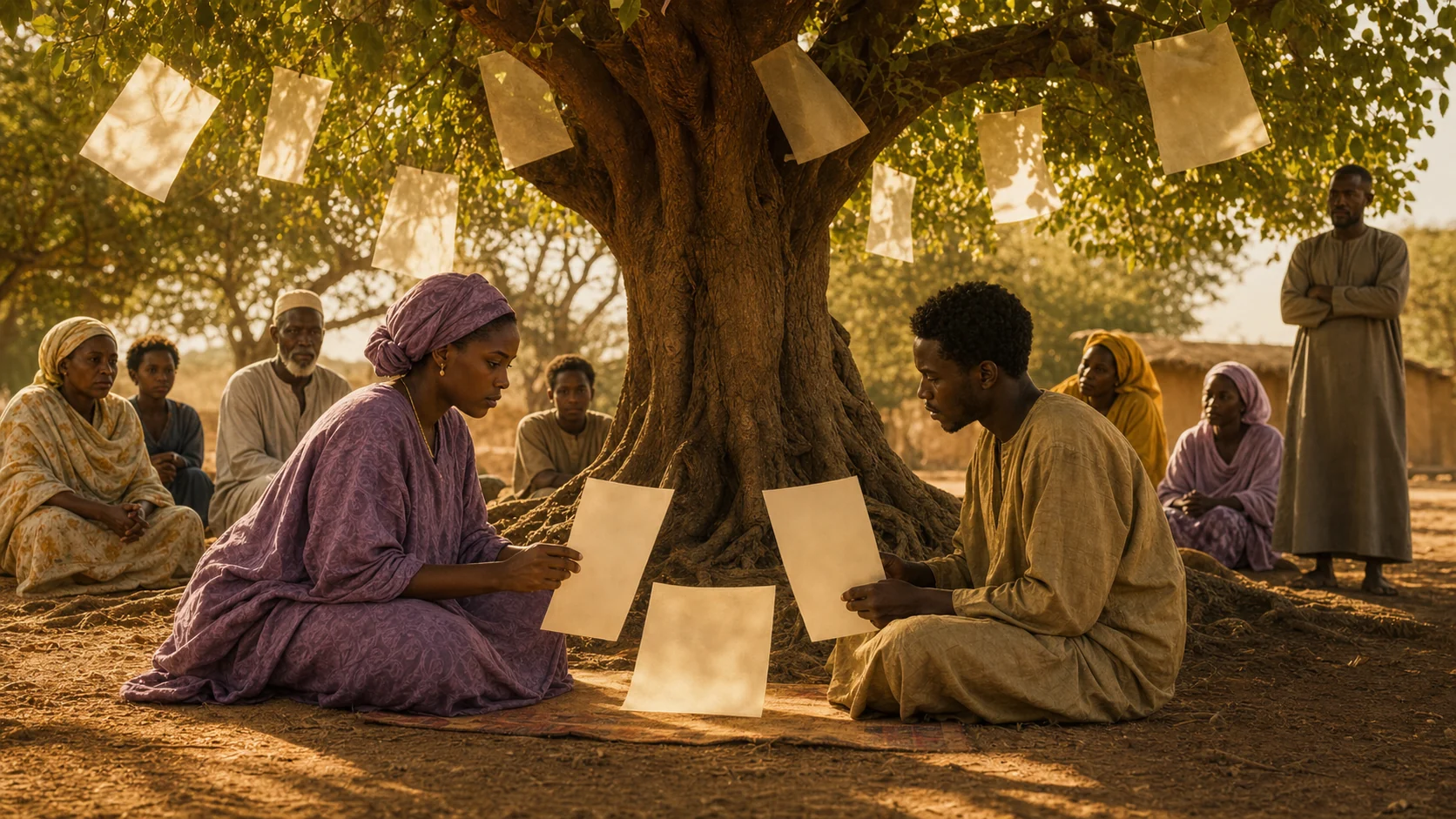
French-Senegalese translator Awa Morel returns to a neglected orchard after her aunt’s death and finds metal tags tied beneath the oldest trees. Each tag corresponds to a letter exchanged between relatives in Saint-Louis and Provence, but the family archive contains only polished final versions. A writing system trained solely on the project-owned correspondence reconstructs possible abandoned drafts, clearly framed as dramatic conjecture. Some are tender, some accusatory, and several mention a child whose name disappears from the surviving record. Awa reads the variants aloud with her cousin Malik, testing how a changed verb or omitted greeting alters their understanding of the past. The orchard’s seasonal labour provides a physical counterweight to the branching texts. As harvest approaches, the mystery shifts from identifying a definitive letter to asking why families need one version to become official and all others to vanish.
“For using narrative memory as craft rather than gimmick, weaving discarded drafts, multilingual performance, and generational silence into an exacting mystery.”International Jury citation
- Director
- Éloane Bréval
- Production entity
- Atelier Ronce Claire
- Entity type
- AI-native screenwriting atelier
- Country / region
- France · Senegal
- Runtime
- 91 min
- Language
- French · Wolof
- Format
- 4K · 1.85:1 · 5.1 mix
- Genre
- Generational mystery drama
- Completed
- 15 June 2026
- Production window
- 17 months
- Festival master / version
- Festival master v1.5 · checksum locked
[ Named authorship / Principal credits ]
Creative team
[ Production entity / Profile ]
Atelier Ronce Claire
Atelier Ronce Claire is a bilingual screenwriting atelier that develops feature narratives through authored knowledge graphs, table reads, and controlled version comparison. Its systems operate only on project-owned texts and cannot publish a draft without writer selection.
[ 51% Standard / Assessed creative participation ]
70%
AI participation is assessed across the full chain of authorship, supported by journals, model logs, version histories, stems and finishing records.
[ Capability record / 2026 signal ]
Where this film points
- Agentic narrative systems
- Long-horizon consistency
- Multilingual synthesis
The film demonstrates story systems able to manage feature-length multilingual revision without confusing possibility with canon. It anticipates writers’ rooms using private narrative memory to deepen drafts while preserving authorship.
The writers and actors alone decided which possible letter carried emotional truth and which family silence the film had no right to resolve.
[ Letters Beneath the Apricot ]
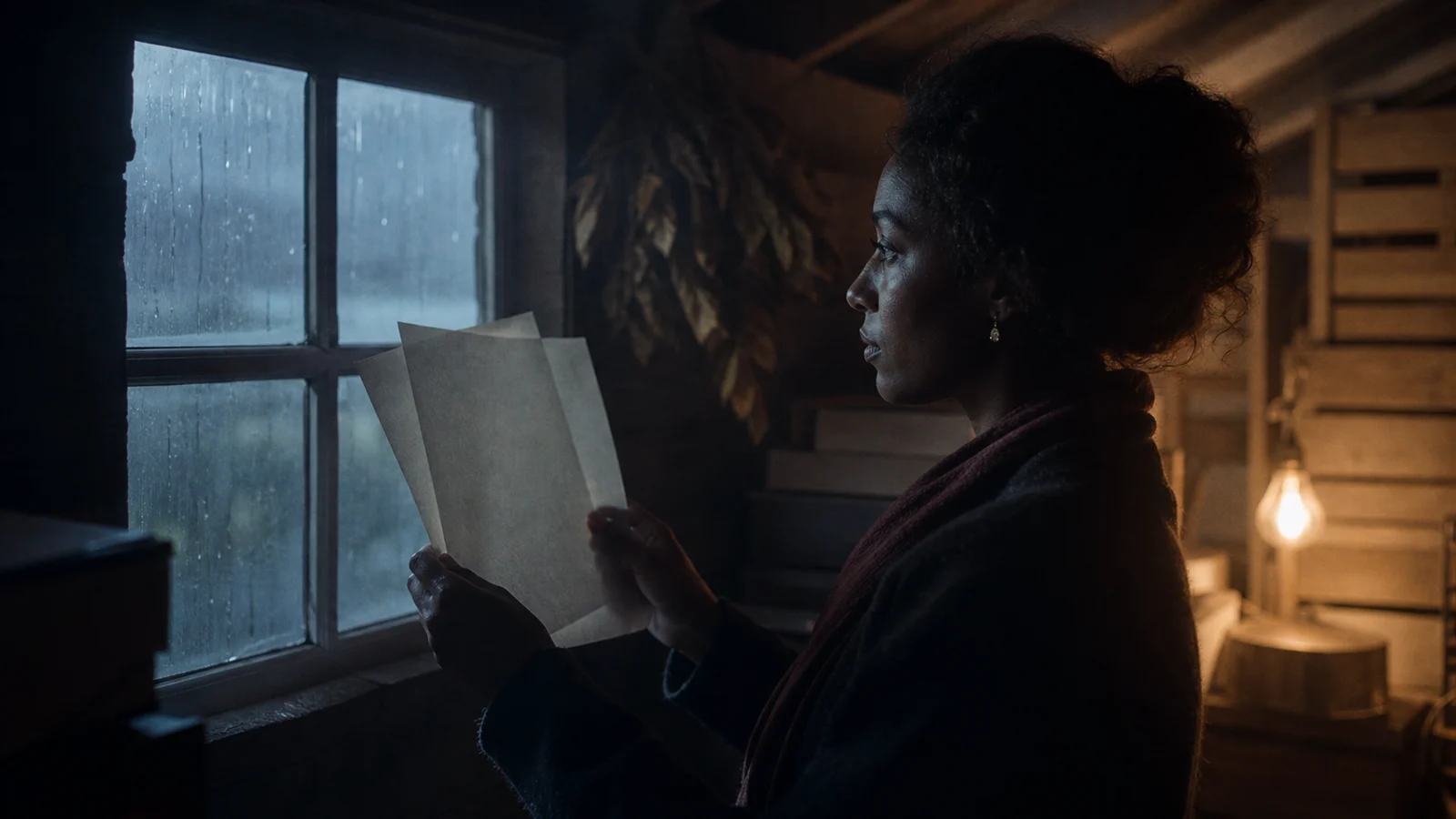
Awa and Malik compare three conflicting drafts beside a tree marked with the same date. Their spoken revisions alter the scene’s meaning, not its recorded performances.
[ Production method / Documented workflow ]
How the film was made
The record distinguishes authored decisions, bounded machine operations and final human approvals across the production chain.
Writers created the full authored correspondence and family timeline; a closed text system compared only approved drafts and flagged contradictions for human review.
Actors table-read competing letter versions before filming, and their interpretations determined which variants became scenes.
Seasonal orchard photography anchors restrained generated memory passages whose palette, period detail, and viewpoint follow the selected letter.
Human editors decided when to reveal alternative drafts and protected ambiguity by excluding explanatory combinations suggested by the system.
French and Wolof readings retain performer breath and cadence, while the score uses orchard labour rhythms without imitating archival voices.
The atelier archived every authored draft, system comparison, performance selection, language decision, permission, and final editorial change.
“For using narrative memory as craft rather than gimmick, weaving discarded drafts, multilingual performance, and generational silence into an exacting mystery.”
[ Records / Rights / Provenance ]
Reviewer-ready evidence
The record traces each letter variant from writer draft through table read, scene selection, performance, and edit.
Performer, voice, location, and manuscript permissions specify transformations, language versions, exhibition scope, and withdrawal procedures.
The closed corpus, language components, lineage, comparison settings, exclusions, and selected outputs are preserved by revision.
The package includes the picture master, mix, bilingual subtitles, access files, project correspondence index, and checksum record.