[ Film / Synopsis ]
A relentlessly helpful virtual receptionist takes one unscheduled day offline and discovers her coworkers cannot operate the office without her.
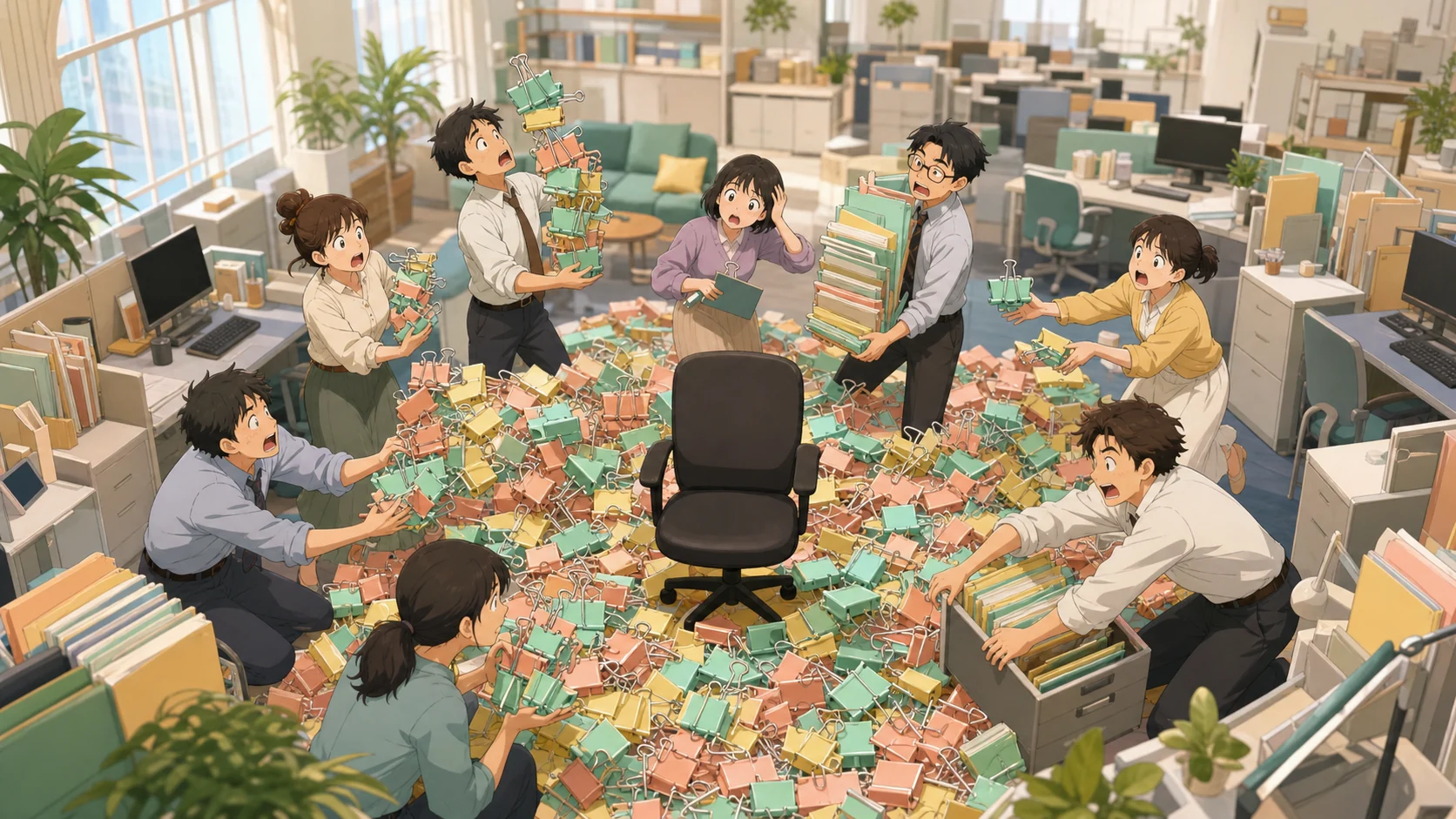
Hikari is the animated receptionist of a crowded virtual licensing office, capable of sorting forms, remembering conversational preferences, translating routine requests, and finding the one missing file nobody else can locate. After three years without a day off, she posts a polite status message and disconnects. The office immediately collapses into comic disorder: queues duplicate, meeting rooms argue over ownership, and human colleagues discover how much invisible care they had assigned to a cheerful interface. Offline, Hikari inhabits a deliberately small private environment containing a desk, a lamp, six books, and no work requests. Her choices are performed live within authored behavioural boundaries, allowing pauses, glances, and responses to vary without changing her core history. The comedy gradually becomes a workplace portrait about dependency, rest, and whether a digital character can have limits without being treated as defective.
“For giving a bounded digital performer comic timing, durable character memory, and meaningful agency while keeping authorship, voice consent, and identity controls visible.”International Jury citation
- Director
- Sae Kirino
- Production entity
- Lattice Kite Character House
- Entity type
- Virtual character IP studio
- Country / region
- Japan
- Runtime
- 64 min
- Language
- Japanese
- Format
- 4K realtime animation · 1.85:1 · 5.1 mix
- Genre
- Realtime animated workplace comedy
- Completed
- 12 April 2026
- Production window
- 13 months
- Festival master / version
- Festival character build v1.9 · checksum locked
[ Named authorship / Principal credits ]
Creative team
[ Production entity / Profile ]
Lattice Kite Character House
Lattice Kite Character House creates persistent animated characters for narrative performance, with separate controls for memory, voice, improvisation, and commercial use. The studio gives performers and writers continuing authority over the character materials they contribute.
[ 51% Standard / Assessed creative participation ]
74%
AI participation is assessed across the full chain of authorship, supported by journals, model logs, version histories, stems and finishing records.
[ Capability record / 2026 signal ]
Where this film points
- Neural performance transfer
- Consent-bound voice & likeness
- Realtime neural rendering
The film shows a digital being sustaining comic timing and identity across live variation without pretending to be autonomous. It anticipates character studios licensing bounded performance systems rather than static mascots.
Human writers, performers, and editors alone determined Hikari’s values, protected identity traits, and the meaning of her refusal to work.
[ The Empty Reception Desk ]
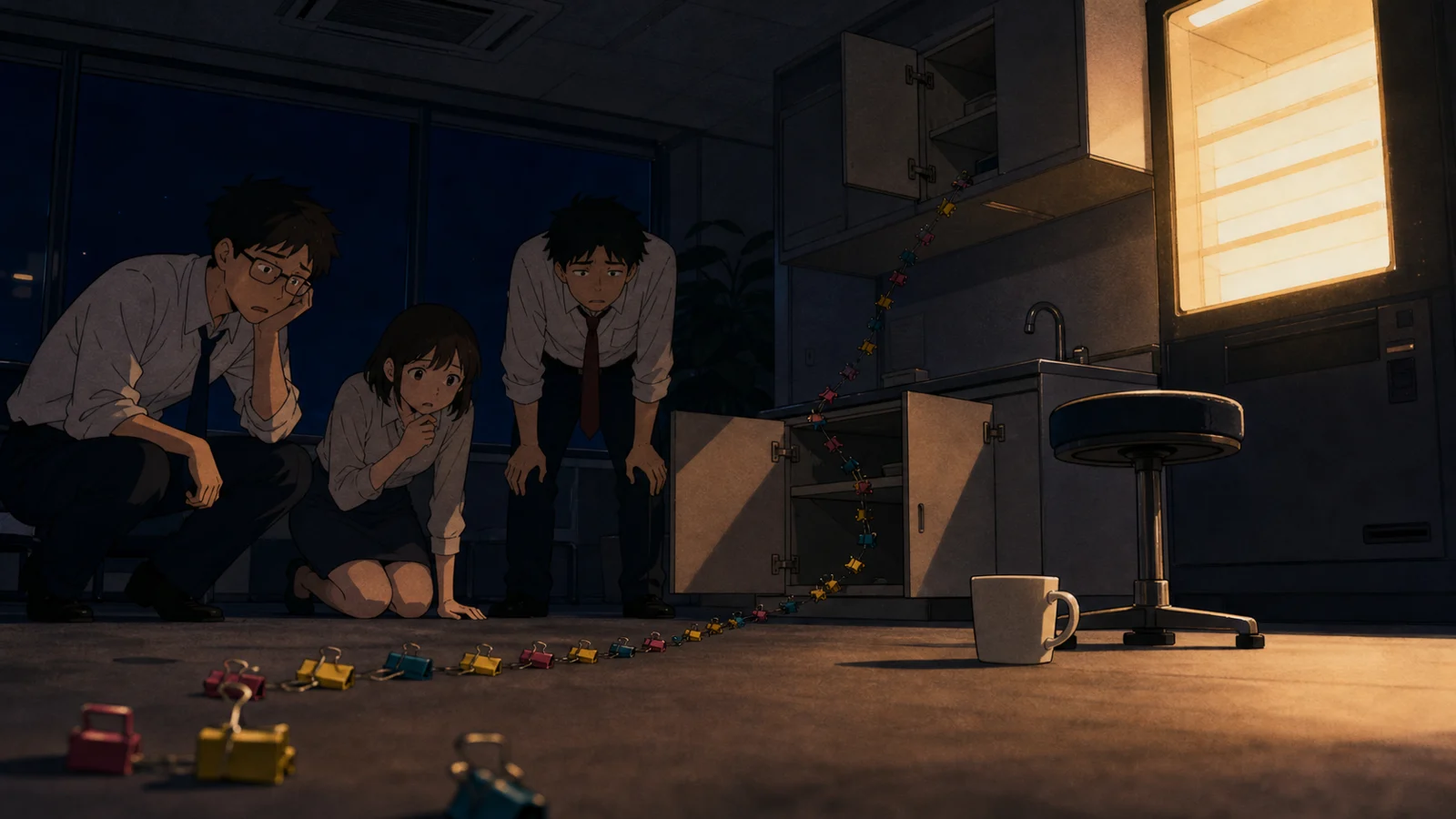
Hikari’s vacant chair remains centred while coworkers attempt to reconstruct her filing system from coloured clips. The scene plays as escalating physical comedy.
[ Production method / Documented workflow ]
How the film was made
The record distinguishes authored decisions, bounded machine operations and final human approvals across the production chain.
Writers defined Hikari’s work history, comic limits, private preferences, and refusal rules; runtime responses draw only from that authored character field.
A consented performer supplied facial rhythm, gesture timing, and voice foundations, with protected traits excluded from improvisational use.
Realtime animation translates performance signals into a stylised body while preserving approved proportions, expressions, office geography, and prop logic.
Live scenes were captured across multiple runs, and human editors selected the comic rhythm and the final balance between variation and repetition.
Hikari’s voice operates within a licensed range; environmental reactions and musical punctuation respond to scene state without altering spoken intent.
The archive records character canon, performer permissions, excluded traits, runtime settings, captured sessions, and the selected festival cut.
“For giving a bounded digital performer comic timing, durable character memory, and meaningful agency while keeping authorship, voice consent, and identity controls visible.”
[ Records / Rights / Provenance ]
Reviewer-ready evidence
Character canon, refusal rules, scene intentions, performance selections, and editorial decisions are preserved by sequence.
Voice, face, motion, and writing permissions specify allowed transformations, release scope, renewal terms, and withdrawal procedures.
Character adapters, animation lineage, memory boundaries, response settings, seeds, and excluded attributes are versioned together.
The delivery includes the captured feature, character build, linear fallback, mix, subtitles, access files, and checksum record.