[ Film / Synopsis ]
Residents stage possible futures inside a half-built district, rehearsing how streets, shade, care, and conflict might change daily life.
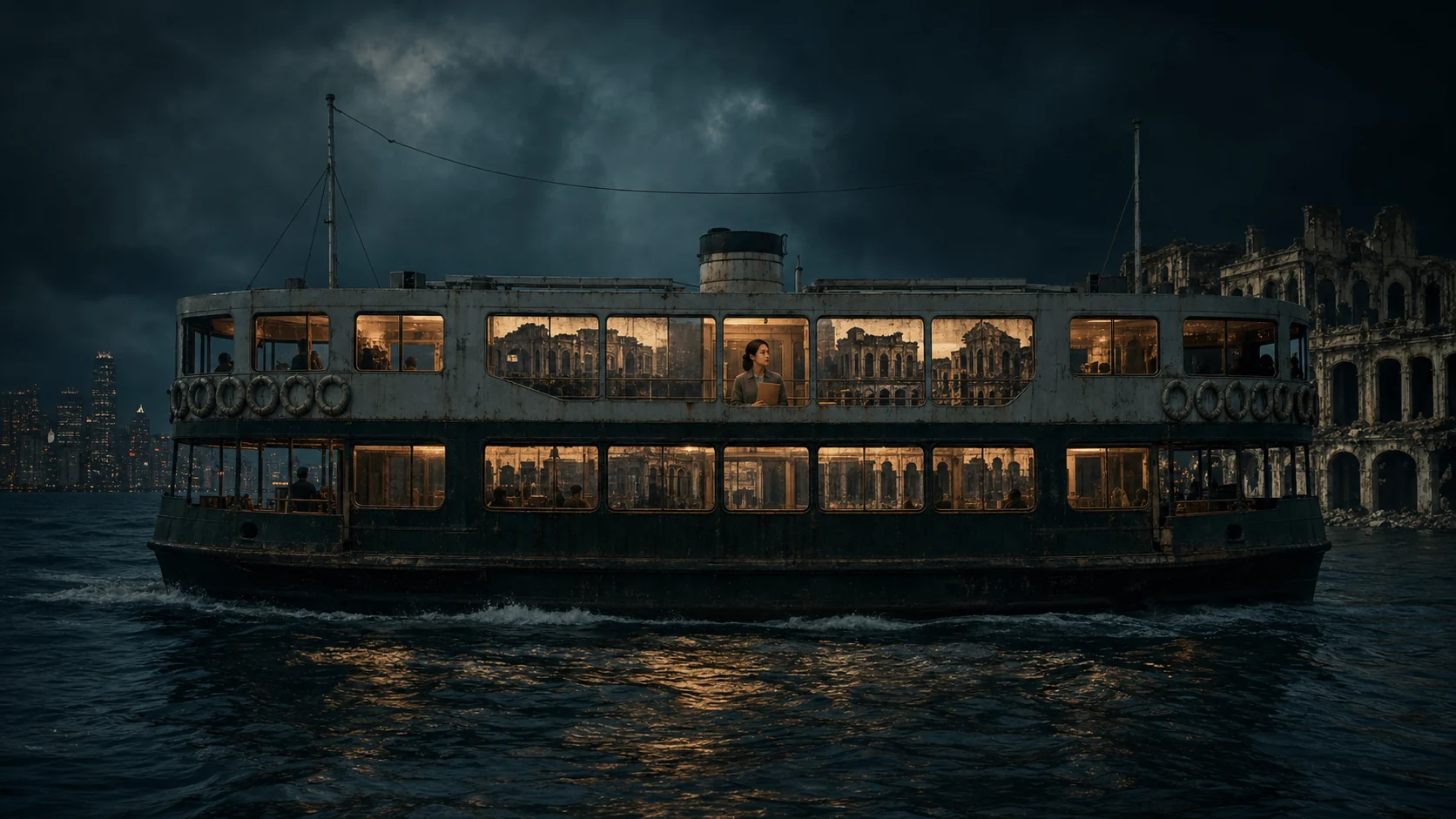
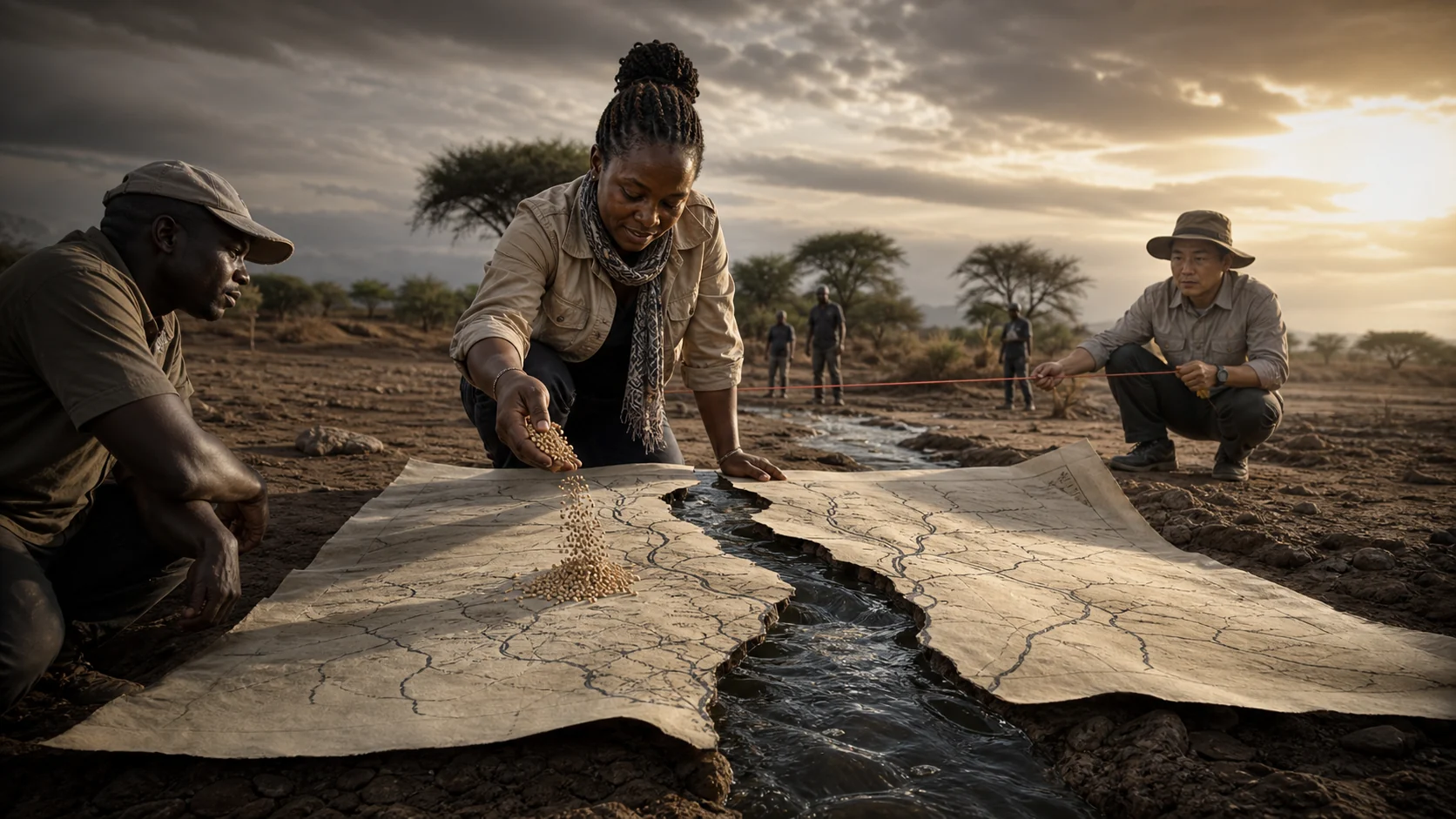
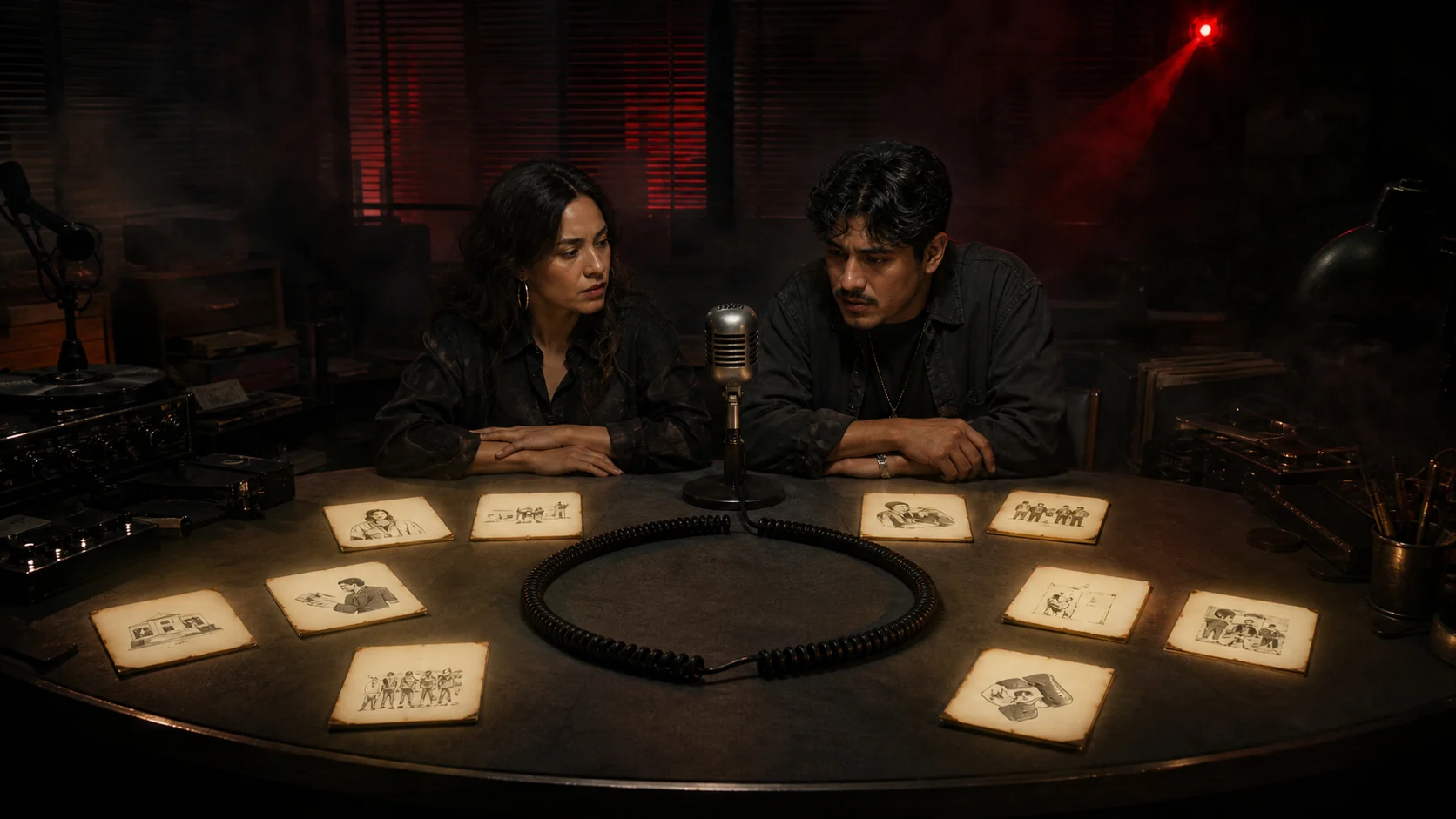
In a half-built coastal district, residents, delivery riders, shopkeepers, nurses, and schoolchildren are invited to rehearse three possible versions of the same neighbourhood ten years ahead. Modular walls, projected streets, and realtime environments let them test where shade falls, how a clinic queue moves, which route a child takes home, and what happens when public space becomes privately managed. The narrative follows architect Mariam, whose confident master plan begins to fragment under the performances she is directing. Each future inherits recorded choices from the previous rehearsal but remains visibly provisional. Generated environments respond to spatial rules and participant movement within a controlled stage; they do not claim to predict actual development. As the rehearsals become more personal, the city is understood less as an image than as negotiated time, access, memory, and care.
“For making urban foresight cinematic, participatory, and materially specific while refusing the false certainty of a single optimised shared future.”International Jury citation
- Director
- Rima Al Suwaidi
- Production entity
- Future Courtyard Cinema
- Entity type
- AI-native spatial cinema studio
- Country / region
- United Arab Emirates · Jordan
- Runtime
- 86 min
- Language
- Arabic · English
- Format
- 6K · 2.39:1 · 7.1.4 immersive mix
- Genre
- Participatory urban futures drama
- Completed
- 22 May 2026
- Production window
- 16 months
- Festival master / version
- Festival master v2.3 · checksum locked
[ Named authorship / Principal credits ]
Creative team
[ Production entity / Profile ]
Future Courtyard Cinema
Future Courtyard Cinema is an AI-native spatial studio creating participatory films from practical sets, realtime environments, and civic role-play. It treats future scenarios as authored questions and keeps policy claims outside the system’s authority.
[ 51% Standard / Assessed creative participation ]
77%
AI participation is assessed across the full chain of authorship, supported by journals, model logs, version histories, stems and finishing records.
[ Capability record / 2026 signal ]
Where this film points
- Procedural world simulation
- Realtime neural rendering
- Controllable cinematography
The film demonstrates realtime spatial cinema mature enough for collective rehearsal while retaining authored limits and uncertainty. It anticipates future-vision work becoming participatory production rather than polished prediction imagery.
Participants and facilitators alone interpreted the civic trade-offs and decided which future questions deserved to shape the final film.
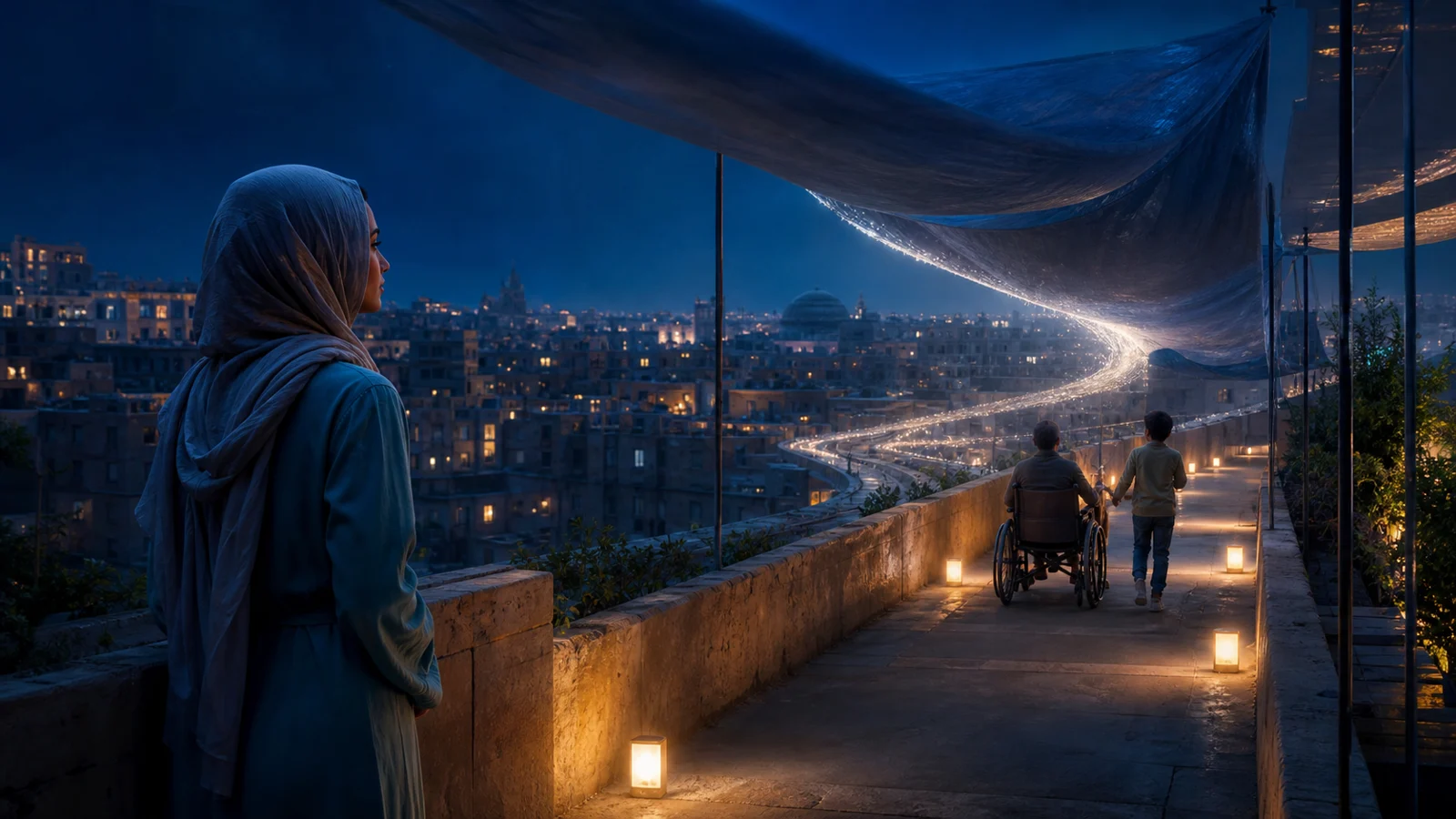
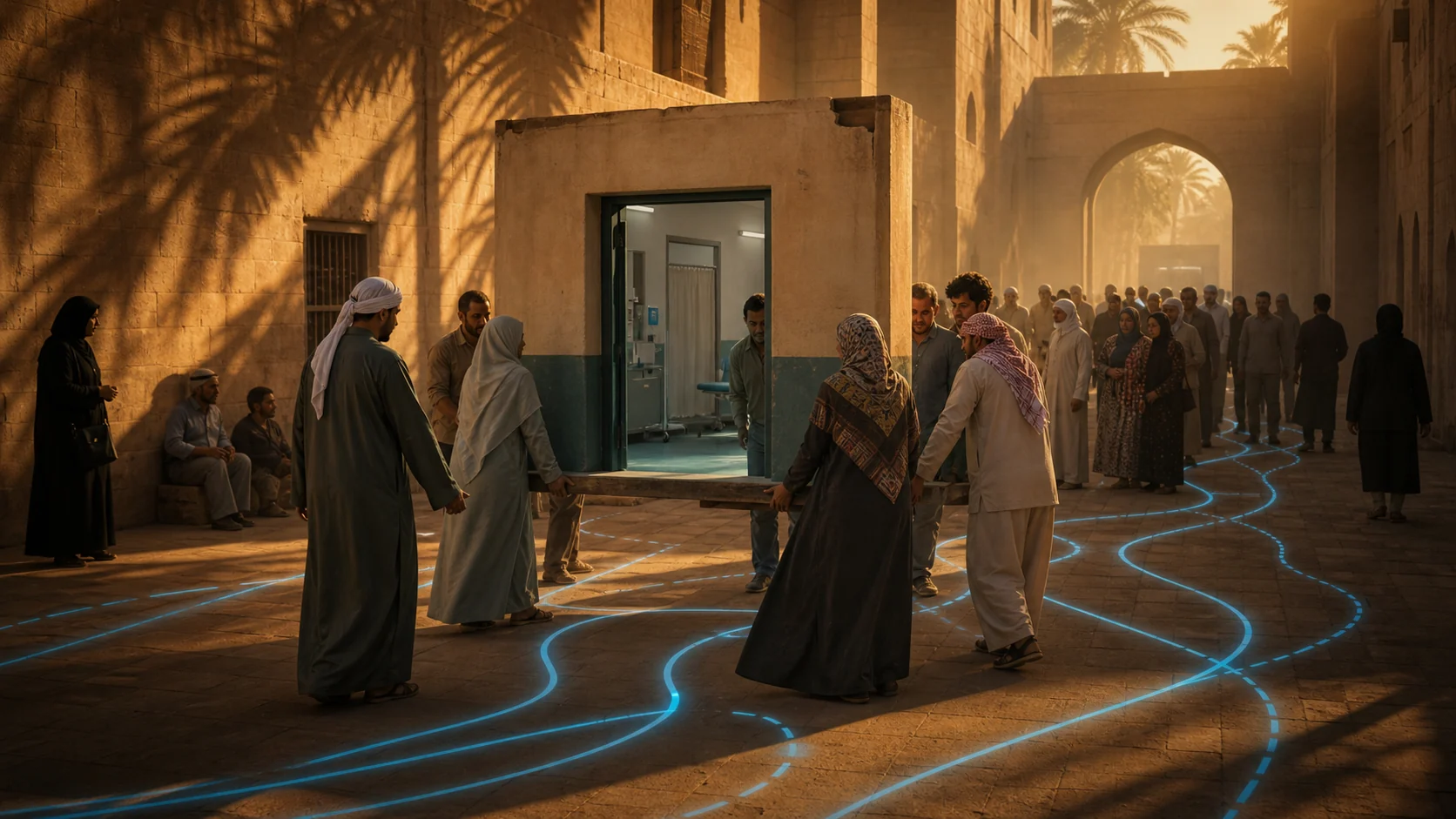
[ Shade Moves, Queue Remains ]
Participants shift a clinic entrance while the projected district recalculates walking routes and afternoon shade. Mariam watches one problem disappear and another emerge.
[ Production method / Documented workflow ]
How the film was made
The record distinguishes authored decisions, bounded machine operations and final human approvals across the production chain.
Writers and participants defined three civic scenarios, character obligations, and decision limits before spatial computation shaped any rehearsal.
Residents and actors rehearsed complete situations on a modular stage, with improvisation directed and selected by human facilitators.
Realtime spatial rendering responds to movement, shade rules, access routes, and set changes inside art-directed architectural bounds.
Editors intercut rehearsals by recurring human needs and preserved contradictions instead of assembling an ideal future.
Adaptive city layers follow space and crowd density, while dialogue, safety cues, and participant meaning remain fixed.
The studio archived scenario authorship, participant permissions, spatial assumptions, render settings, rejected outcomes, and final editorial decisions.
“For making urban foresight cinematic, participatory, and materially specific while refusing the false certainty of a single optimised shared future.”
[ Records / Rights / Provenance ]
Reviewer-ready evidence
The record links each scenario, spatial change, performance choice, participant response, and edit to its human author.
Participant, performance, voice, location, and scenario permissions define transformations, scope, duration, and withdrawal procedures.
Spatial lineage, geometry sources, simulation bounds, render settings, seeds, and excluded predictive claims are preserved.
The delivery contains the 6K master, immersive mix, subtitles, access files, scenario maps, cue sheet, and checksum record.