[ Film / Synopsis ]
Volunteer maintainers race through one night to make a fragile realtime film pipeline reproducible before its only working machine fails.
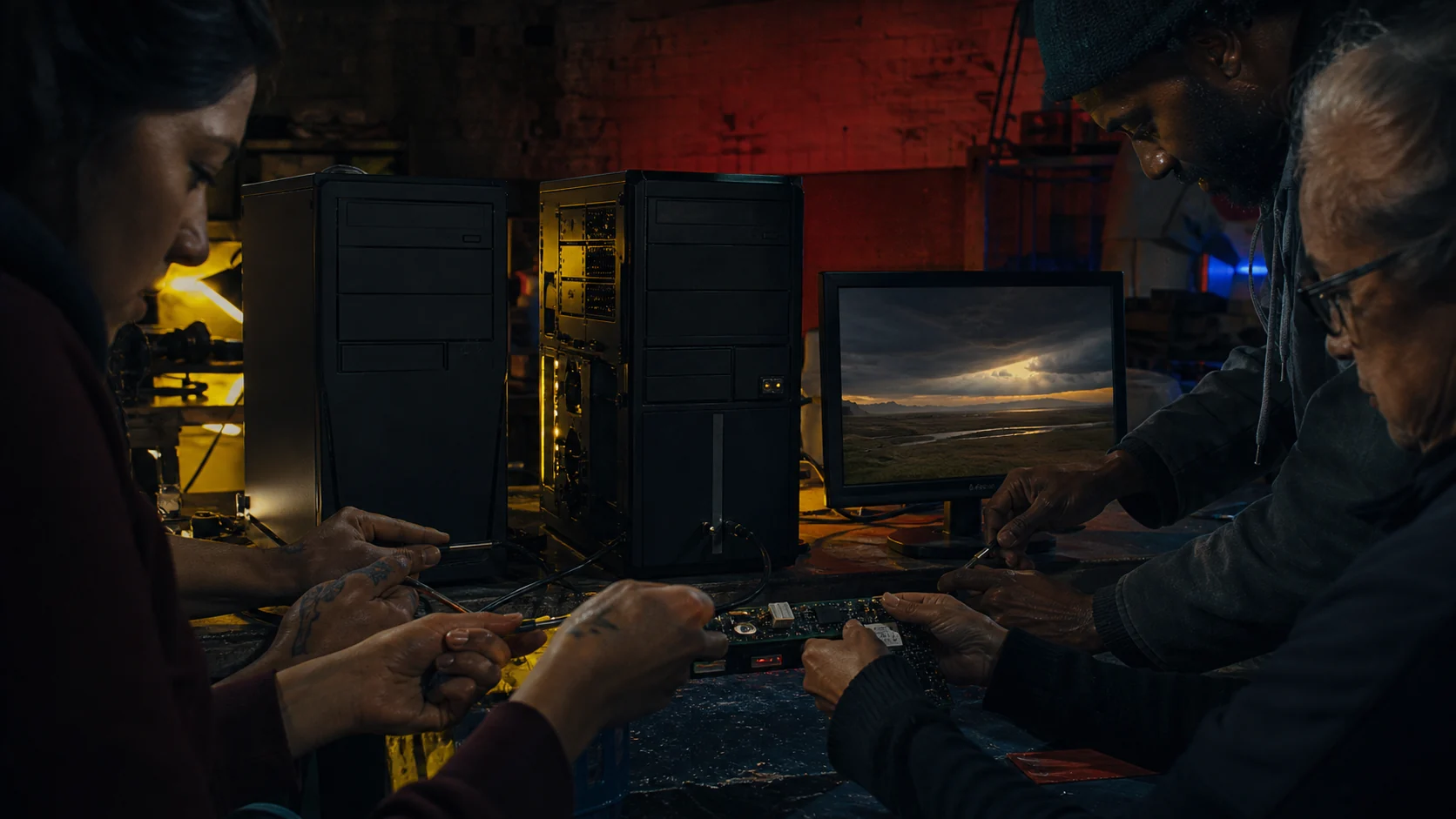
A volunteer laboratory has built a realtime film pipeline from replaceable local components, but only one ageing workstation can run the complete process. When its graphics board begins failing, five maintainers gather for an overnight rebuild. The documentary follows dependency conflicts, unreadable notes, missing sample assets, and the awkward discovery that a supposedly open workflow still relies on one person’s memory. As the machine crashes, the team turns the repair into a public release: plain-text environment files, small licensed test scenes, deterministic presets, accessibility examples, and a step-by-step recovery path for lower-powered hardware. Screen recordings are paired with tabletop demonstrations so that the process remains legible as cinema. By dawn, success is not a flawless render but a second machine producing the same short sequence from a clean setup and documentation another person can actually follow.
“For pairing an engaging systems documentary with genuinely reusable release materials that lower the practical threshold for independent realtime cinema.”International Jury citation
- Director
- Nia Holloway
- Production entity
- Common Night Render Foundation
- Entity type
- Open-source non-profit laboratory
- Country / region
- United States
- Runtime
- 43 min
- Language
- English
- Format
- 4K · 1.78:1 · 5.1 mix
- Genre
- Open-process systems documentary
- Completed
- 16 June 2026
- Production window
- 8 months
- Festival master / version
- Festival master v1.2 · release bundle locked
[ Named authorship / Principal credits ]
Creative team
[ Production entity / Profile ]
Common Night Render Foundation
Common Night Render Foundation is a non-profit laboratory that publishes local, replaceable production pipelines for small film teams. Its releases include source files, documentation, test assets, access examples, and clear licensing boundaries.
[ 51% Standard / Assessed creative participation ]
73%
AI participation is assessed across the full chain of authorship, supported by journals, model logs, version histories, stems and finishing records.
[ Capability record / 2026 signal ]
Where this film points
- Local reproducible pipeline
- Realtime neural rendering
The work demonstrates that an open film pipeline must include runnable assets, access examples, and recovery paths, not code alone. It predicts reproducibility becoming a recognised cinematic contribution.
Maintainers alone diagnosed failures, chose licensing compromises, wrote the explanations, and accepted responsibility for what the public release could support.
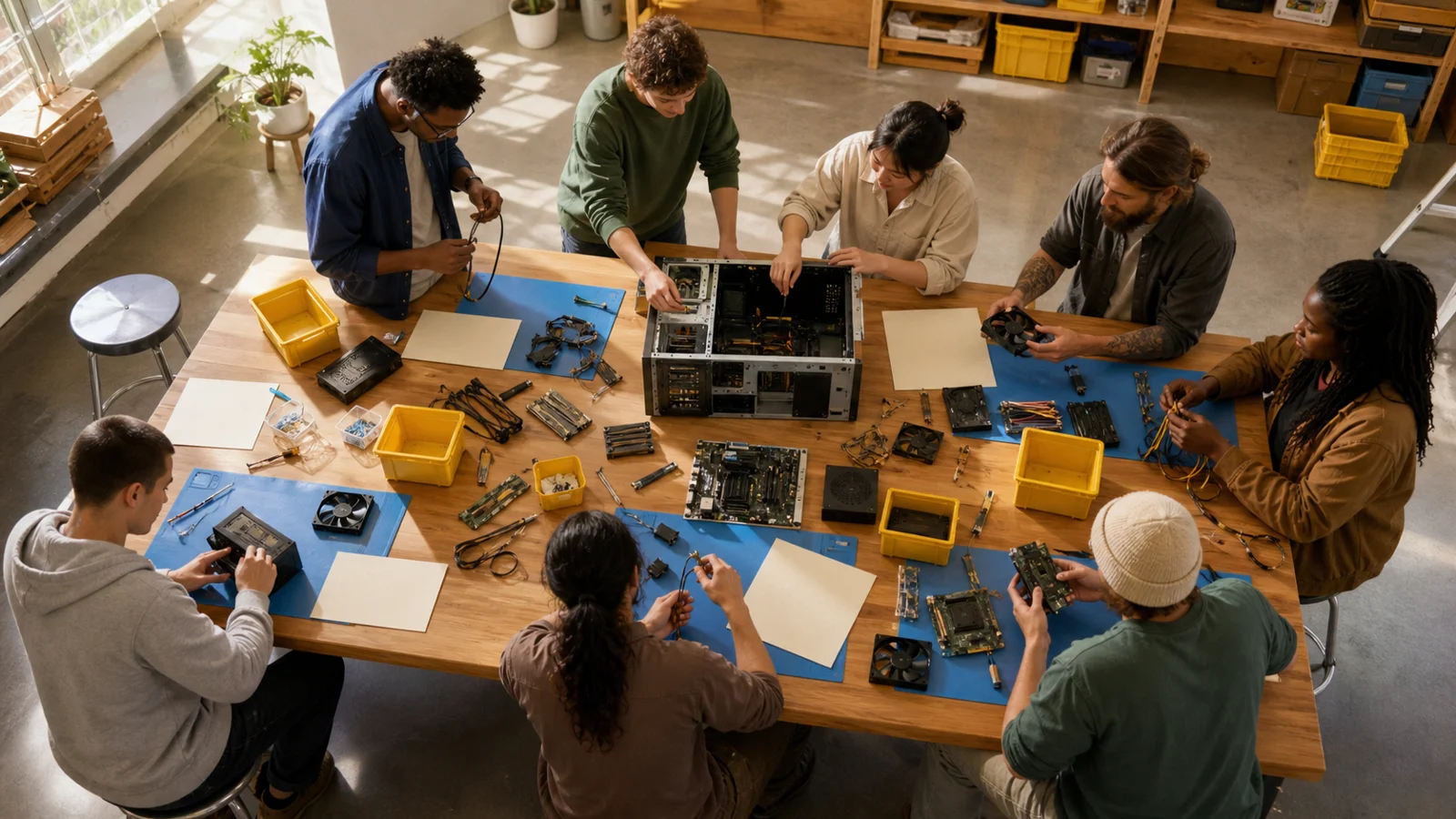
[ Clean Machine, First Frame ]
A second workstation produces the reference frame while the original machine remains powered down beside it. Every setup step is visible on paper and screen.
[ Production method / Documented workflow ]
How the film was made
The record distinguishes authored decisions, bounded machine operations and final human approvals across the production chain.
The filmmakers organised the night around concrete reproducibility failures, while maintainers chose which technical events carried the documentary story.
Participants worked in real time and repeated only essential explanations; no voice or screen presence was synthetically replaced.
Realtime reference scenes, screen captures, and practical tabletop views use replaceable local components and openly licensed sample materials.
The edit preserves dead ends and repair time, while project files mirror the published timeline so viewers can follow each change.
Location sound and restrained composed pulses clarify long processes, with separate dialogue, effects, and access-description assets included.
The foundation archived source code, licenses, component lineage, presets, setup logs, accessibility samples, failure notes, and release checksums.
“For pairing an engaging systems documentary with genuinely reusable release materials that lower the practical threshold for independent realtime cinema.”
[ Records / Rights / Provenance ]
Reviewer-ready evidence
The record connects documentary scenes to technical events, participant decisions, edit changes, and corresponding release materials.
Participant, code, asset, voice, image, and music permissions define reuse terms, attribution, duration, and withdrawal procedures.
Local model lineage, weights licensing, adapters, seeds, deterministic presets, dependencies, and replacement options are published.
The package contains the master, mix, subtitles, access files, source bundle, setup guide, test scene, and checksum record.